
Service Overview
With over 15 years of experience in precision machining of non-standard parts, we provide comprehensive and customized solutions for advanced manufacturing enterprises and research institutions. We fully understand the unique needs of each client, whether it’s simple single-part machining or complex complete machine design and manufacturing. Our professional technical team and advanced equipment ensure accurate project delivery. In the field of three-axis CNC machining, Laitoga focuses on three-axis milling of large structural components, providing research institutions with cost-effective CNC small-batch machining solutions. Our technical team is skilled in the precision machining of various metals, such as stainless steel, titanium alloys, copper, and aluminum alloy thin-walled parts, as well as the machining of various plastic parts, with particular expertise in precision manufacturing for the aerospace and automotive industries.
Processing capacity
| Category | Describe |
| Maximum part size | 3000*1500*800mm (custom sizes available) |
| Minimum part size | 3×3×3 mm (custom sizes available) |
| General tolerances | Within ±0.01mm (specific dimensions to be customized according to drawings) |
| Delivery time | Delivery typically takes 5-10 days, but the exact time will be determined based on an assessment of the specific circumstances. |
Our Advantages
- High cost-effectiveness: Compared to multi-axis machining equipment, three-axis CNC machining can meet the machining needs of many common parts while being more economical, providing customers with high-performance machining services and reducing production costs.
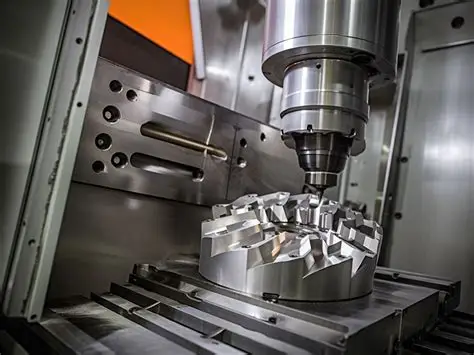

- Rapid Response: The equipment is relatively simple to operate, with a short programming and debugging cycle, enabling it to quickly respond to customers’ urgent processing needs, arrange production in a timely manner, and shorten delivery time.
- Stable Precision: Through rigorous equipment debugging and calibration, combined with high-precision cutting tools and advanced machining processes, it can maintain high-precision machining during three-axis linkage machining, ensuring consistent part quality. Examples include milling of aerospace aluminum alloy frames, machining of automotive chassis structural parts, and machining of robot joint coordinates.
- Mature Technology: Three-axis CNC machining technology has been developed over many years and is highly mature. Our technical team has rich machining experience and can handle various common machining problems, such as specializing in the machining of large-size box-type parts and the batch machining of precision small parts, ensuring the smooth progress of the machining process.
- Flexible customization: We can customize processing solutions according to different customer needs. Whether it’s the size, shape, or surface treatment requirements of the parts, we can provide personalized solutions.
- Quality Assurance: From raw material inspection and processing monitoring to finished product testing, we adhere to a strict quality control system to ensure that every product delivered meets quality standards.
Application areas
Mechanical Manufacturing
Processing various mechanical parts, such as gears, shafts, and flanges, involves precise milling and drilling operations to ensure the dimensional accuracy and assembly requirements of the parts, which is the fundamental guarantee for the normal operation of mechanical equipment.
Automotive Parts Manufacturing
This involves the initial machining processes for producing automotive engine blocks, cylinder heads, transmission housings, and other components. It lays the foundation for subsequent precision machining and assembly, improving the production efficiency and quality stability of automotive parts.
Mold Manufacturing
Used for cavity machining and parting surface machining of molds, it can accurately machine the shape and size of the mold, ensuring the precision and molding quality of the mold, and shortening the mold manufacturing cycle. In the case of injection mold core milling: it meets the requirement of Ra1.6μm for mirror EDM pre-machining.
Frequently Asked Questions
What surface roughness can be achieved for parts machined by three-axis CNC?
Under normal machining conditions, the surface roughness can reach Ra3.2 – Ra6.3 μm for metallic materials and Ra1.6 – Ra3.2 μm for non-metallic materials. For higher surface quality requirements, the surface roughness can be further reduced by optimizing the machining process, selecting appropriate cutting tools and parameters.
Can I use the special materials I provide for three-axis CNC machining?
Yes, that’s possible. Before processing, our technical team will analyze and evaluate the special materials you provide, develop suitable processing techniques and parameters to ensure a smooth processing procedure and guarantee the quality of the parts.
How can three-axis CNC machining ensure the machining accuracy of complex-shaped parts?
We employ precise programming and advanced CAM software for toolpath simulation and optimization to ensure that the toolpath meets the part design requirements. Simultaneously, during machining, high-precision measuring equipment is used for real-time monitoring, allowing for timely adjustments to machining parameters. Furthermore, through multiple clamping and machining strategies, we gradually approach the design dimensions, guaranteeing the machining accuracy of complex-shaped parts.
If I have specific surface treatment requirements for the parts I’m machining, can you meet them?
Yes. We have a complete surface treatment process system, including anodizing, electroplating, spraying, sandblasting, polishing, and other surface treatment methods. After three-axis CNC machining, we can perform corresponding surface treatments according to your needs to meet your specific requirements for the appearance and performance of the parts.
What are the criteria for pricing three-axis CNC machining?
The quote is determined based on a comprehensive assessment of factors including the complexity of the parts (such as shape, size, and precision requirements), the difficulty of the machining process, material costs, machining time, and surface treatment requirements. We will conduct an accurate cost calculation and provide a quote based on the detailed drawings and specific requirements you provide.