
Service Overview
External cylindrical grinding is a process that uses a high-speed rotating grinding wheel to grind the outer surface of a workpiece. It allows for precise control of the workpiece’s dimensions, shape, and surface quality, effectively correcting roundness and cylindricity errors, and reducing surface roughness. It is an important method for improving the precision of the outer diameter of parts such as shafts and bushings.
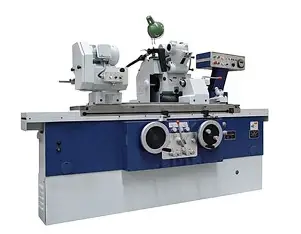
We are equipped with high-precision external cylindrical grinding machines, featuring high-precision spindles and feeding systems, specializing in the precision grinding of long, slender shafts. Our machines possess excellent rigidity and stability. Our experienced technical team is familiar with the grinding characteristics of various materials and has extensive experience in grinding high-hardness shafts, particularly excelling in processing difficult-to-machine materials such as hardened steel and cemented carbide. We can also precisely adjust processing parameters and select appropriate grinding wheels based on the material, size, and precision requirements of different workpieces to ensure optimal processing quality. Whether it’s parts requiring standard precision or high-precision parts, we can provide professional external cylindrical grinding services.
Processing capacity
| Category | Description |
| Maximum machining diameter | 300mm (negotiable in special circumstances) |
| Maximum machining length | 1000mm (negotiable in special circumstances) |
| General tolerances | Dimensional tolerance: ±0.005mm; Roundness tolerance: ±0.003mm (These tolerances are consistently maintained with standard machining processes; further optimization is possible for special requirements.) |
| Delivery date | For small batch orders, the lead time is 5-10 days, subject to actual project assessment. |
| Customized services | The materials that can be processed include carbon steel, alloy steel, stainless steel, bearing steel, cemented carbide, and other metal materials, as well as some hard and brittle materials such as ceramics; we support various grinding methods including ordinary cylindrical grinding, conical surface grinding, and profile grinding. We specialize in grinding shafts with large length-to-diameter ratios (L/D = 30:1) and precision grinding of miniature journals (minimum Ø3mm). |
Our advantages
- Wide processing adaptability: It can process workpieces of different materials, sizes, and shapes, as well as high-hardness materials, such as grinding of hardened guide rails. Whether it’s a long, slender shaft or a short, thick shaft, high-quality external cylindrical grinding can be achieved by adjusting process parameters, meeting diverse processing needs.
- Excellent shape accuracy: It can effectively correct shape errors such as roundness and cylindricity of the outer diameter. For the machining of outer diameters with special shapes such as conical surfaces and contoured surfaces, it can also ensure high shape accuracy, meeting the performance requirements of the parts.
- Excellent surface quality: By carefully selecting grinding wheels and optimizing grinding parameters, the surface roughness of the machined outer diameter can be reduced to Ra0.2 – Ra0.8μm, resulting in a smooth surface that significantly improves the wear resistance and fitting accuracy of the parts, and reduces subsequent processing steps.
Application areas
Mold Manufacturing Industry
Machining the outer diameter of guide pins, guide bushings, and other parts of the mold to ensure the accuracy and guiding performance of the mold, thereby improving the service life of the mold and the quality of molded products.
Aerospace Industry
Grinding of shaft-type parts for aircraft engines, landing gear shafts, etc., to meet the stringent requirements for high precision and high reliability in the aerospace field, ensuring the performance and safety of aerospace vehicles.
Automotive Industry
Machining the outer diameter of key components such as crankshafts, camshafts, and half-shafts in automotive engines, as well as shaft-type parts in transmissions, to improve the quality and precision of automotive parts and enhance the power performance and reliability of automobiles. For example, in the case of automotive crankshaft repair and grinding: providing high-precision remanufacturing services for engine overhauls.
Mechanical Manufacturing Industry
Used for processing various shaft-type parts, such as motor shafts, machine tool spindles, gear shafts, etc., as well as the outer diameter of disc-shaped and sleeve-shaped parts. In the precision grinding of machine tool spindles, it can ensure a spindle runout of ≤0.005mm and a surface roughness of Ra0.4μm, guaranteeing the dimensional accuracy and shape accuracy of the parts. It is an indispensable processing technology in mechanical manufacturing.
Frequently Asked Questions
What are the requirements for workpiece clamping when using an external cylindrical grinding machine?
The workpiece must be securely clamped and accurately positioned to prevent displacement and vibration during grinding. Common clamping methods include center clamping and chuck clamping. During clamping, it is necessary to ensure that the workpiece axis coincides with the grinding machine spindle axis. For long shaft-like parts, the accuracy and surface quality of the center hole must also be considered.
What is the minimum surface roughness that can be achieved with external cylindrical grinding?
Under conventional machining conditions, the surface roughness of external cylindrical surfaces processed by cylindrical grinding machines can reach Ra0.2 – Ra0.8 μm. By selecting finer grit grinding wheels, optimizing grinding parameters, and applying appropriate finishing processes, the surface roughness can be further reduced to meet higher quality requirements.
What are the advantages of external cylindrical grinding compared to other external cylindrical machining methods?
External cylindrical grinding machines offer high processing accuracy, with dimensional and shape accuracy far exceeding that of general machining methods such as turning; they produce excellent surface quality with low roughness; and they can process high-hardness materials. Machining methods such as turning have relatively limited accuracy and surface quality, and are less capable of processing high-hardness materials.